
Most basement wall cracks in Calgary homes are not a sign that the house is failing. Poured concrete shrinks as it cures, and thin vertical cracks are close to universal. The cracks worth paying attention to are the ones that leak, the ones that keep growing, and the ones that run sideways or push the wall out of line. Here is how to tell the difference, what you can check yourself, and when injection is the right fix.
Why basement walls crack in the first place
Almost every Calgary basement built in the last few decades has poured concrete walls. Concrete loses water as it cures, and as it dries it shrinks a little. A long wall can't shrink evenly, so it relieves the stress by cracking, usually in the first year or two after the house is built. These shrinkage cracks tend to be thin, close to vertical, and often start at the corner of a basement window or near the middle of a long wall.
The ground around the house adds its own pressure. Much of Calgary sits on clay-rich soil that swells when it is wet and shrinks when it dries. Winter frost, freeze-thaw swings during chinooks, and heavy spring snowmelt all push on the outside of the foundation. Over the years, that pressure can widen an existing crack or open a new one.
Shrinkage cracks vs. moving cracks
The first question is whether the crack is old and stable or still on the move. Here is a rough guide.
Usually not a structural concern
- Hairline to narrow vertical cracks, about the width of a credit card or less.
- Slightly diagonal cracks running from the corner of a window or a beam pocket.
- Cracks that look the same year after year, with both sides of the crack still flush.
These are common and usually cosmetic from a structural point of view. The catch is that even a hairline crack can run right through the wall, and water can follow it.
Worth having inspected
- Horizontal cracks, especially partway up the wall. These can mean soil pressure is pushing the wall inward.
- A wall that bows, leans or bulges when you sight along it.
- Cracks wider than about 6 mm (1/4 inch), or cracks that are clearly getting wider.
- One side of the crack sitting out further than the other, so you can feel a ledge with your fingers.
- Stair-step cracks in block walls following the mortar joints.
- Doors upstairs that suddenly stick or new drywall cracks above the basement, appearing at the same time.
None of these automatically means a big repair, but they are signs of movement, and movement needs to be understood before anyone seals the crack.
Dry cracks vs. leaking cracks
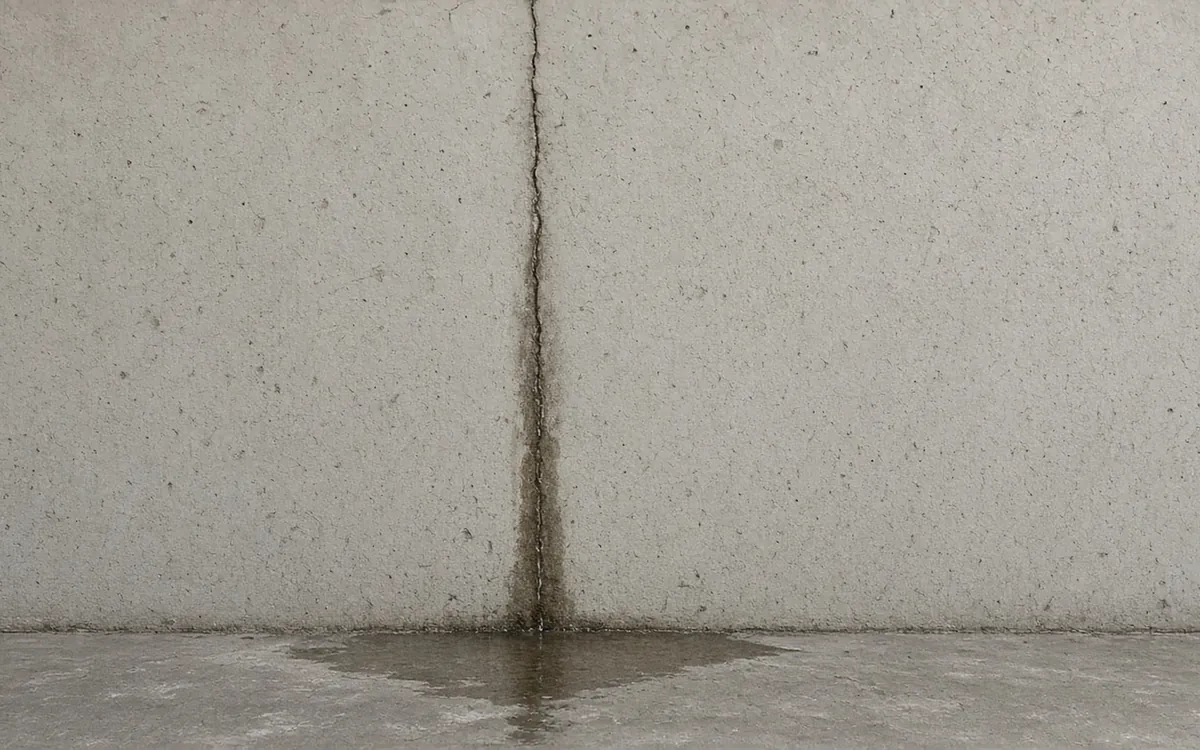
The second question is whether water is getting through. A crack can be dry for years and then start leaking during one wet spring. Look for:
- Dark, damp edges along the crack after rain or snowmelt.
- White, chalky powder on the concrete. This is efflorescence, the minerals left behind when water passes through and evaporates.
- Rust-coloured streaks or stains running down from the crack.
- Water on the floor at the base of the wall, or a damp patch on carpet or baseboards in a finished basement.
- A musty smell in one corner or along one wall.
In a finished basement, you often can't see the crack at all. Swollen baseboards, peeling paint, bubbling drywall or a smell that won't go away are the usual clues. Spring is when most of these show up, because snowmelt soaks the ground while the soil just below is still frozen. Our guide Why Does My Basement Leak in Spring? explains that pattern in more detail.
How to keep an eye on a crack yourself
If you've found a crack and aren't sure whether it is changing, a few minutes now can save a lot of guessing later.
- Mark the ends of the crack with a pencil line and write the date beside it.
- Photograph it with a ruler or tape measure held across the widest point, so you can compare later.
- Check it every month or two, and especially after spring melt, heavy rain, and the first hard freeze.
- Note any water, even a small damp patch, and when it happened.
If the crack grows past your pencil marks, gets wider, or starts leaking, it is time to have it looked at.
When injection is the right fix
For a leaking crack in a poured concrete wall that isn't moving, crack injection is usually the most effective repair. It is done from inside the basement, without digging up your yard or landscaping.
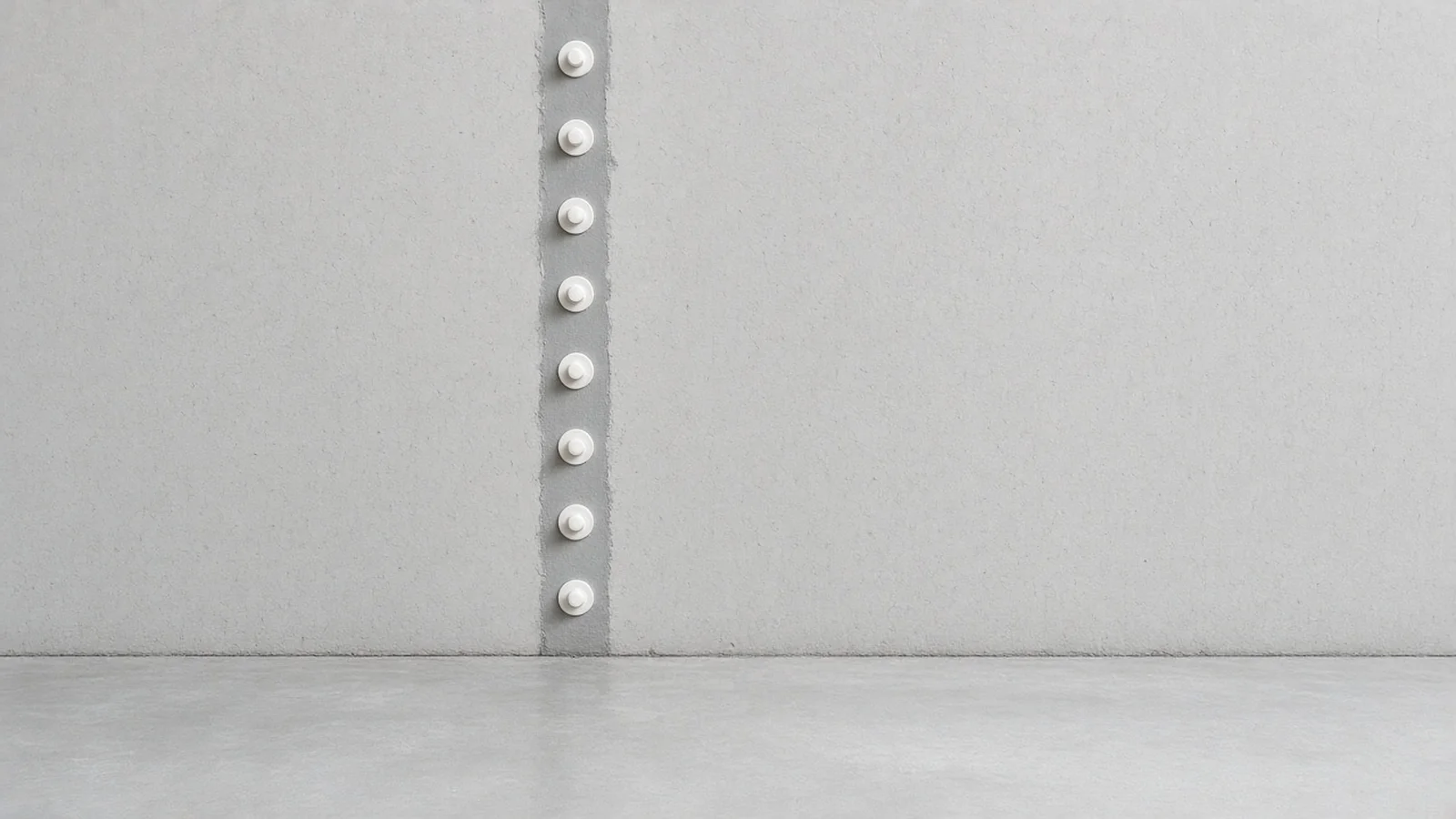
The crack is cleaned, small injection ports are set along its length, and the surface is sealed. Then a liquid material is pumped in under pressure, starting from the bottom, until it fills the crack through the full thickness of the wall. On leaking cracks, a flexible material that expands to fill voids is typically used, because it seals out water and can handle the small seasonal movement Calgary foundations go through. Once it cures, the ports are trimmed off.
What doesn't work well is smearing caulking or patching cement over the surface from inside. Water is still travelling through the crack inside the wall, so surface patches tend to let go or leak around the edges within a season or two.
GG Calgary backs crack injection with a lifetime, transferable warranty against water leaking through the repaired crack. That warranty covers leaks only, which is exactly why it matters to sort out any movement first.
When injection isn't enough on its own
Injection seals a crack. It doesn't stop a wall from moving, and it doesn't deal with water coming in somewhere else. A different or additional fix may be needed when:
- The wall is bowing or has a horizontal crack. The movement needs to be stabilized first, for example with wall anchors or wall braces, and then the crack can be sealed.
- Water is coming in at several spots, or where the floor meets the wall. That points to water building up around the whole foundation, which is a job for an interior drainage system: a rectangular channel set on top of the footing in clean gravel, carrying water to a sump.
- The crack is in a block wall. Hollow block walls hold water inside the blocks, so they usually need drainage rather than injection.
- Water is pooling against the house outside. Short downspouts and poor grading feed water straight to your cracks, so fixing the outside helps any repair last.
Common questions
My house is new and already has cracks. Is that normal?
Thin vertical shrinkage cracks in the first year or two are very common in new Calgary homes. Mark them and watch them. If one leaks, or you see any of the warning signs above, have it checked, and note any new home warranty coverage you may still have.
The crack has never leaked. Should I fix it anyway?
Not necessarily. A dry, stable hairline crack can simply be monitored. Many homeowners choose to seal cracks before finishing a basement, though, since it is far easier to do with the walls open than after drywall goes up.
Can a crack let radon in?
Yes. Radon is a soil gas, and cracks in foundation walls and floors are one of the ways it gets into a home. Sealing cracks helps, but it isn't a radon fix on its own. Health Canada recommends a long-term test to know your level. See Is Radon a Problem in Calgary Homes?
Can I inject a crack myself?
DIY kits exist, but getting the material through the full wall thickness, without gaps, takes practice. A failed first attempt can also make a professional repair harder. If the crack is leaking or you aren't sure whether it is moving, an inspection is the safer first step.
The short version
- Thin vertical cracks in poured concrete walls are common and usually not structural.
- Horizontal cracks, bowing walls, wide or growing cracks, and offset edges are signs of movement and should be inspected.
- A leaking crack in a stable poured wall is usually best fixed with injection from inside.
- If the wall is moving or water is coming in in several places, deal with that first, with anchors, braces or interior drainage.