
A crawl space can feel like a part of the house you never have to think about. But the air down there doesn't stay down there. In most Calgary homes with a crawl space, damp air from that dirt or gravel floor ends up in the rooms you live in, carrying musty smells and moisture with it. Here is why crawl spaces get so humid, what it does to your house, the signs to watch for, and the fixes that actually work.
Why crawl space air ends up in your living space
Warm air rises. In a heated house, warm air leaks out through the upper floors, the attic hatch, pot lights and gaps around the top of the house. As it escapes, it has to be replaced, and the replacement air is pulled in low, through the basement and crawl space. This is called the stack effect, and it runs hardest in winter, when the gap between indoor and outdoor temperatures is biggest. In Calgary, that's a long season.
So the crawl space acts like the bottom of a chimney. Air moves up from it through gaps around plumbing and wiring, ductwork, the floor boards and the edges of the subfloor. If the air in the crawl space is damp and smells of earth or mould, that's what you breathe upstairs.
What a humid crawl space does to your house
Moisture on its own isn't the whole problem. The trouble starts when damp air meets cool wood, insulation and concrete, and stays there.
- Mould on joists and subfloor. Wood that stays damp for long periods is an easy place for mould to grow. Health Canada's guide to addressing moisture and mould indoors notes that mould can begin to grow within 48 hours where there is excess moisture, and that living with mould and dampness is linked to eye, nose and throat irritation, coughing and worse asthma symptoms.
- Musty smells upstairs. The earthy odour you notice in a closet or by the floor vents often comes from the crawl space.
- Wet, sagging insulation. Batts between the floor joists soak up moisture, get heavy and fall down, leaving cold floors above.
- Weakened wood. Over many years, wood that stays wet can soften and rot. That can show up as bouncy or sagging floors over the crawl space.
Signs your crawl space is too humid
- A musty or earthy smell on the main floor, especially when the furnace runs or on the first warm days of spring.
- Condensation or beads of water on pipes, ducts or the underside of the floor.
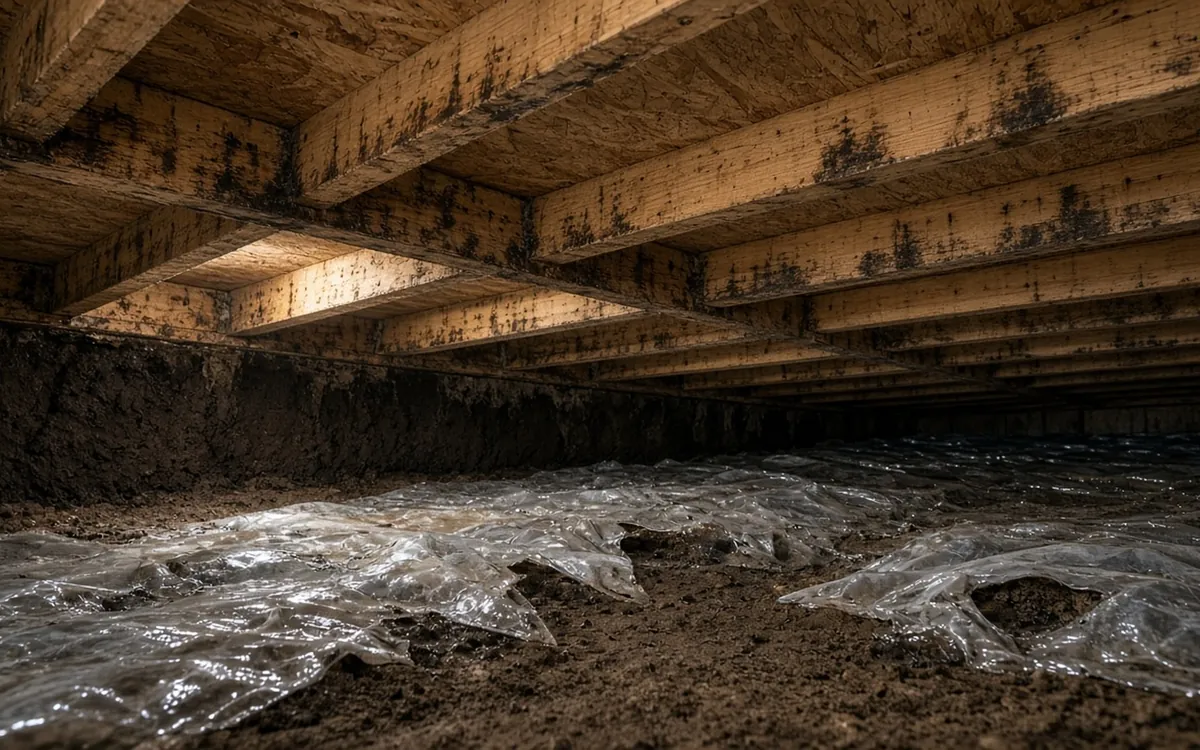
- White, green or black spots on the joists, beams or subfloor.
- Damp or crumbling insulation, or insulation lying on the ground.
- Torn, loose or missing plastic on the floor, with damp soil showing through.
- Puddles or wet soil after snowmelt, chinook thaws or a heavy rain.
- Floors above that feel cold, soft or bouncy.
An inexpensive hygrometer from a hardware store will tell you the relative humidity. Health Canada recommends keeping indoor relative humidity between 30% and 50%, and running a dehumidifier when it is above 50% or when you see condensation on cold surfaces. If your crawl space reads well above that for weeks at a time, it is worth looking at why.
Why Calgary crawl spaces get damp
Calgary's climate is fairly dry, but the moisture in most crawl spaces doesn't come from the outside air. It comes from the ground and from water that is directed toward the house.
Moisture from the ground
Soil is almost never fully dry, even in a dry year. A bare dirt or gravel floor releases water vapour into the crawl space all the time. Much of Calgary sits on clay-rich soil that holds water and drains slowly, which keeps the ground under the house damp long after the surface has dried.
Open vents
Many older crawl spaces were built with vents to the outside, on the idea that airflow would dry them. In practice, vents let in warm, moist summer air after rainstorms, which can condense on cooler surfaces below. In winter, they let in cold air that chills the floor and pipes.
Poor grading and short downspouts
If the ground slopes toward the house, or downspouts empty right beside the foundation, snowmelt and rain soak in against the crawl space walls.
Older homes and foothills properties
Crawl spaces are common in older inner-city homes, under additions and sunrooms, and on acreages in the foothills. In places like Bragg Creek, Redwood Meadows and Priddis, many homes sit near rivers and creeks, on ground with higher water tables, and the area was hit hard by the 2013 floods. Those homes often have older foundations, rubble or block walls, and floors that were never properly lined. In those cases, groundwater can rise into the crawl space itself, not just vapour.
How to fix a humid crawl space
The right fix depends on where the moisture comes from. In most cases, it's a combination of the steps below, done in order.
1. Deal with outside water first
Extend downspouts well away from the house, and regrade soil so it slopes away from the foundation.
2. Add drainage where water collects
If water pools on the crawl space floor or seeps in at the walls, the space needs a way to carry it out. Where drainage is needed, a rectangular channel is set on top of the footing in clean gravel, collecting water along the walls and carrying it to a sump pump that sends it outside.
3. Install a sealed liner or vapour barrier
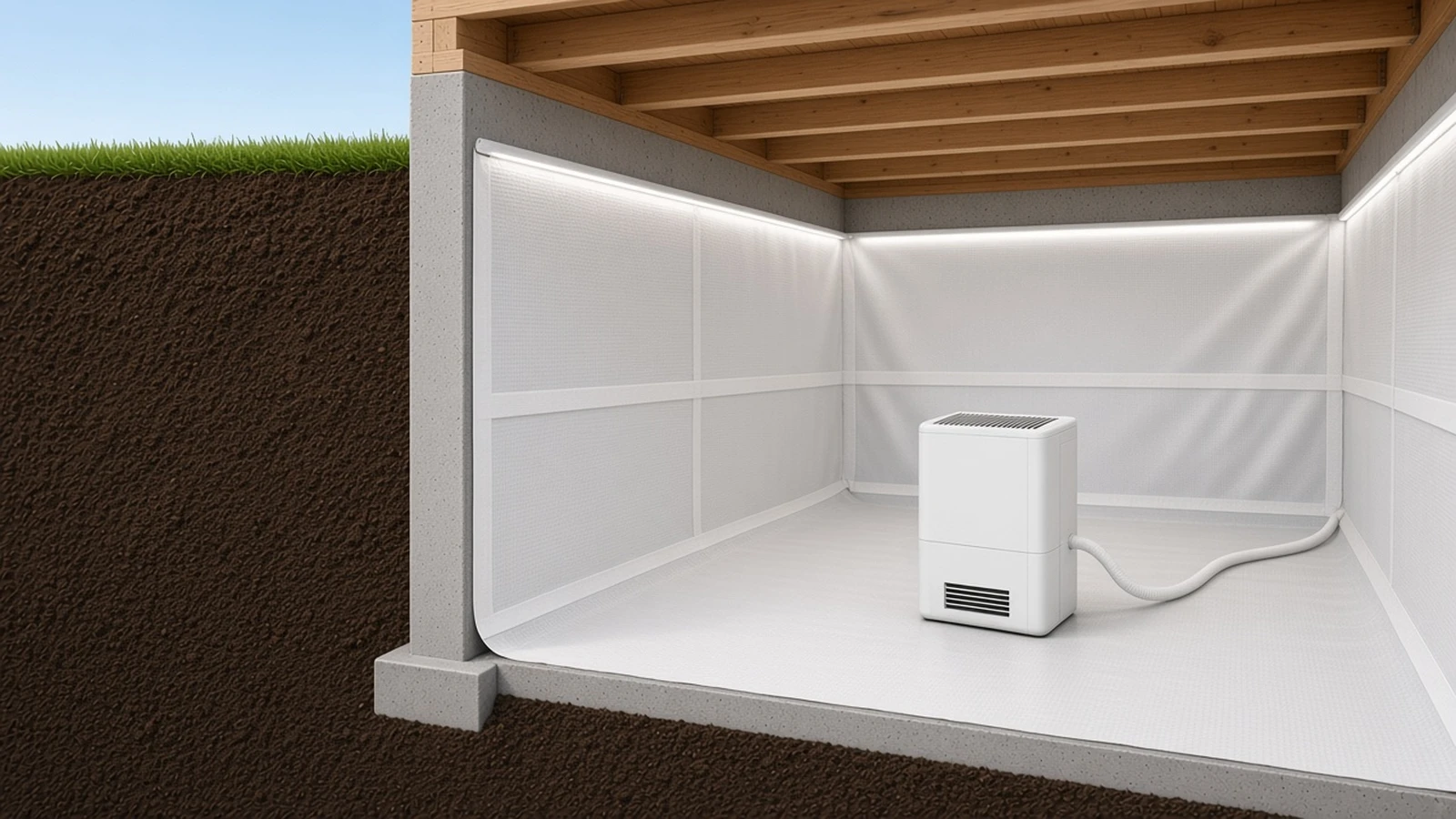
A heavy, puncture-resistant liner is laid over the entire floor, run up the walls, sealed at the seams and fastened at the top. That stops ground moisture from coming up into the air. Fully lining and sealing the floor and walls is often called crawl space encapsulation.
4. Seal vents and air leaks
Once the floor is sealed, outside vents are closed off and the access hatch is weatherstripped, so the crawl space becomes part of the conditioned house rather than a damp space open to the outdoors. Gaps around the rim joist and where pipes and wires pass through the walls are sealed too.
5. Control humidity with a dehumidifier
Even a sealed crawl space can collect moisture from the house and from small leaks. A dehumidifier sized for the space, draining to a sump or a floor drain so it never needs emptying, keeps humidity in the healthy range year-round.
6. Repair what's already been damaged
If there is mould on the wood, it needs to be dealt with properly before the space is sealed. Wet insulation should be removed and replaced. Softened joists or beams may need support. Sealing a crawl space over an existing mould problem only hides it.
Common questions
Should I just open my crawl space vents more?
Usually not. Venting rarely dries a crawl space in our climate, and in winter it makes floors colder and puts pipes at risk of freezing. Sealing the floor and walls and controlling humidity directly is the more reliable approach.
Is plastic on the dirt floor enough?
Loose plastic is better than nothing, but thin sheeting tears easily, and if it isn't sealed at the seams and walls, moisture still escapes around it. A properly sealed liner does a much better job.
Does a damp crawl space affect radon?
A bare dirt floor is an easy path for radon, a soil gas, to enter a home. Sealing the crawl space floor can help, but it isn't a radon fix on its own. Health Canada recommends a long-term test of at least three months to know your level. See Is Radon a Problem in Calgary Homes?
The short version
- Because of the stack effect, crawl space air ends up in your living space.
- Damp crawl spaces lead to musty smells, mould, wet insulation, and over time, weakened wood.
- In Calgary, most of the moisture comes from the ground, open vents, poor grading and, in foothills homes, high water tables.
- The fix is usually a combination: manage outside water, add drainage where needed, seal the floor and walls with a liner, close vents, and run a dehumidifier.