
The short answer: at least three months, and the best time to start is in the fall, so most of the test runs through the heating season. A short test can give you a quick number, but radon moves up and down so much that only a long-term result tells you what your family is really breathing. Here is how to time it, where to put the detector, and how to read what comes back.
Why a radon test takes months, not days
Radon levels inside a house are never steady. They rise and fall from hour to hour and season to season, depending on the weather, wind, how tightly the house is closed up, and how hard the furnace is running. A reading taken over two or three days might catch a calm, low stretch or a windy, high one. Either way, it may not reflect your average.
Health Canada's guideline of 200 Bq/m³ is based on the average level over a year, because the health risk comes from breathing radon for years. That is why Health Canada recommends a long-term test of at least three months, and says three to twelve months is best. The longer the test, the closer the result gets to your true yearly average.
When to test in Calgary
You can start a long-term test any time, but Health Canada recommends that at least 91 days of the test fall in the heating season. In Calgary, that makes the window from about October to April the ideal time, and starting in the fall gives you the most room.
Winter testing gives a more cautious, realistic picture for a few reasons:
- Windows and doors stay closed. Less fresh air means radon that gets in tends to stay in.
- The stack effect is strongest. When warm air rises and leaks out the top of the house, it pulls air in at the bottom, including soil gas through the basement floor. On a cold Calgary night with the furnace running, that pull is at its peak.
A test that runs mostly through summer, with windows open, can underestimate your level. Health Canada notes that a test with fewer than 91 days in the heating season may need to be repeated.
Choosing a test
There are two common ways to run a long-term test at home:
- A long-term detector. This is a small passive device you leave in place for the test period, then mail to a lab. You get your result back from the lab. These kits are widely available.
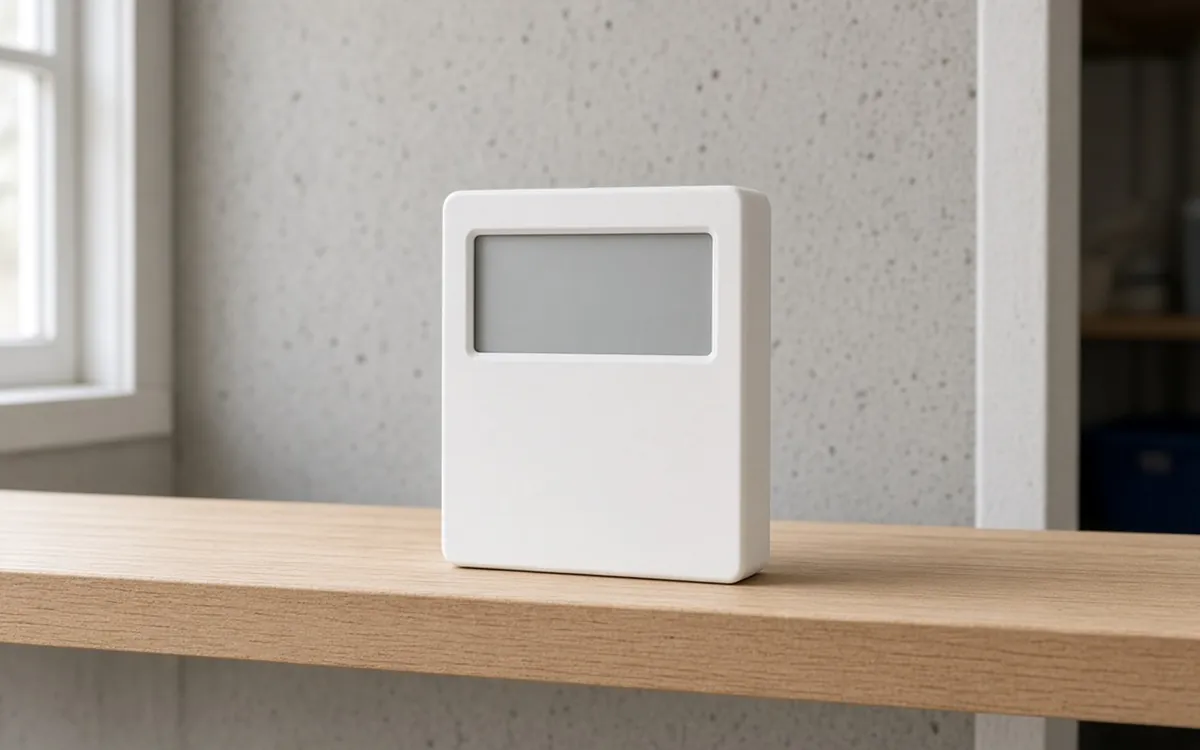
- An electronic radon monitor. This is a plug-in or battery unit that shows a running average on a screen. Health Canada suggests choosing one that has passed performance testing under the Canadian National Radon Proficiency Program (C-NRPP). Like a detector, it needs to run for at least three months before you rely on the average.
You can also have a professional measure your home. Whichever route you take, the goal is the same: a three-month-plus average from the right spot in the house.
Where to put the detector
Placement matters almost as much as timing. Health Canada's advice comes down to a few simple rules.
Pick the right room
Test on the lowest lived-in level of the home, in a room where someone spends more than four hours a day. In many Calgary homes that is a finished basement bedroom, family room, playroom or office. Bedrooms are a good first choice, since most people spend more time there than anywhere else. If you only use the basement for storage and laundry, test the main floor instead.
Avoid kitchens, bathrooms, laundry rooms, closets and unfinished basements. Their air and ventilation are different from the rest of the house, so they don't give a fair reading.
Pick the right spot in the room
- At breathing height, on a shelf, dresser or side table, or hanging from the ceiling.
- Away from windows, doors, vents, fans and exterior walls, so drafts don't skew the reading.
- Away from heat and sunlight, such as fireplaces, baseboard heaters and sunny windowsills.
- Away from electronics and appliances like TVs, fridges and microwaves.
- Out of reach of kids and pets, somewhere it won't get moved.
Then leave it alone
Write down the start date and location the way the kit asks, and set a reminder for when the test ends. Live in the house normally during the test. There is no need to keep windows shut more than usual or change how you run the furnace. You want a reading of everyday life, not a special setup.
Reading your result
Results are reported in becquerels per cubic metre (Bq/m³). Health Canada's guidance is:
- Below 200 Bq/m³: below the guideline. Lower is always better, and it is still worth retesting from time to time or after major changes to the house.
- 200 to 600 Bq/m³: Health Canada recommends reducing the level within two years.
- Above 600 Bq/m³: Health Canada recommends reducing the level within one year.
A result above the guideline isn't an emergency, but it is a clear signal to plan a fix. The most common one in Canadian homes is a sub-slab depressurization system: a sealed pipe and a quiet fan that pull soil gas from under the basement floor and vent it outside. You can read more about how that works in our guide, Is Radon a Problem in Calgary Homes?
When to test again
A single good result isn't a lifetime pass. Plan to test again:
- After a mitigation system goes in, to confirm the level has come down.
- After major renovations, such as finishing the basement, replacing windows, adding a bedroom downstairs, or changing the furnace or ventilation.
- When you start using a lower level more, for example turning a storage room into an office or a kids' room.
- Every few years, since foundations crack and settle, and houses change over time.
Common questions
Can I just do a short test?
A short test of a few days can be a useful first look, and is sometimes used during a home sale because of timing. But it can't confirm whether your yearly average is above or below the guideline. Follow it with a long-term test before deciding anything.
I'm planning to finish my basement. Should I test first?
Yes, if you can. Testing before walls and flooring go in makes it easier to plan a suction point and run a pipe neatly if you need a system. If the basement isn't lived in yet, Health Canada says a space about to become a bedroom or office can be treated as a lived-in area for testing.
My neighbour tested low. Do I still need to test?
Yes. Two houses on the same street can have very different results because of soil, foundation cracks and how each house is built and sealed. Your neighbour's number tells you little about yours.
Is fall too late to start?
No. Fall is the best time. A test started in October or November in Calgary will run through the coldest months and give you a reliable result by winter's end, in time to plan any work for spring.
The short version
- Run a long-term radon test for at least three months, and up to twelve.
- In Calgary, start in the fall so at least 91 days fall in the heating season.
- Put the detector on the lowest lived-in level, in a bedroom or living space, at breathing height and away from drafts and heat.
- Compare your result to Health Canada's 200 Bq/m³ guideline, and retest after any fix or major renovation.
Sources: Health Canada, Guide for radon measurements in homes and How to use an electronic radon monitor or a long-term detector.